


Source: A study has identified mutations arising during brain development that may contribute to schizophrenia. Unlike inherited genes, these somatic mutations occur after conception and were found more frequently in schizophrenia patients’ brain tissue. By sequencing DNA from neurons in the dorsolateral prefrontal cortex, researchers identified single-nucleotide variants linked to disrupted brain functions.
This discovery highlights the importance of studying both inherited and non-inherited genetic factors. Environmental triggers, like maternal infection, may also influence these mutations, suggesting new avenues for schizophrenia treatment. Researchers plan further studies to deepen understanding and improve therapies for this complex disorder.
Key Facts:
- Somatic mutations, occurring after conception, are linked to schizophrenia.
- DNA from the prefrontal cortex revealed more single-nucleotide mutations in schizophrenia cases.
- Environmental factors, such as maternal infection, may trigger some mutations.
Source: Mount Sinai Hospital
A collaborative study between researchers at the Icahn School of Medicine at Mount Sinai and Harvard Medical School has identified genetic mutations that occur during brain development and may contribute to the development of schizophrenia.
The research, published in Science, reveals that in addition to genes inherited from parents, certain mutations that arise after conception, called somatic mutations, could play a significant role in the disorder’s development. The paper is titled “Somatic mosaicism in schizophrenia brains reveals prenatal mutational processes.”

The study is the first to explore how specific mutations, known as single-nucleotide variants—tiny alterations in a single “letter” of the DNA code—may increase schizophrenia risk alongside inherited genetic factors.
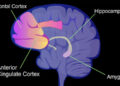
The researchers studied postmortem brain tissue from individuals with schizophrenia and a group of people without the condition as controls. By sequencing DNA from neurons in the dorsolateral prefrontal cortex, a brain region critical for cognitive function, the team identified single-nucleotide variants.
This study is significant because it found individuals with schizophrenia had more of these mutations in certain regions of the brain’s DNA than those without the condition. Some of these mutations are thought to disrupt important biological processes involved in brain development and function, which could contribute to the symptoms of schizophrenia.
“This study provides an important insight into the genetic factors contributing to schizophrenia,” said co-senior author Andrew Chess, Ph.D., Professor of Genetics and Genomic Sciences at Icahn Mount Sinai.
“Beyond the inherited mutations we typically think of, we now see that mutations arising during brain development may also contribute to the disease.”
Schizophrenia affects around 1% of the population globally, making it a significant public health issue. By highlighting the potential role of somatic mutations, this study adds a new layer of complexity to our understanding of the disease. It also underscores the importance of investigating both inherited and non-inherited genetic changes to fully comprehend how schizophrenia develops.
The researchers also found that some of the mutations had a molecular signature previously seen in mutations arising after inflammation, consistent with the possibility that environmental factors, such as maternal infection during pregnancy, may play a role in the development of schizophrenia.
These findings could inform future therapeutic approaches by identifying new genetic targets for drug development.
This study marks a pioneering effort in exploring the role of single-nucleotide variants in schizophrenia. The authors plan to expand their research by analyzing a larger number of individuals and leveraging emerging DNA technologies to examine the genes affected by these somatic mutations in greater detail.
The ultimate goal is to deepen our understanding of how these genetic changes impact brain development and contribute to mental health disorders.
“As we continue to explore these mutations and their effects on brain function, we hope to uncover new pathways for potential therapeutic interventions,” Dr. Chess added.
“By expanding the number of cases we study and using cutting-edge technologies, we aim to better understand the genetic mechanisms behind schizophrenia and ultimately improve outcomes for those affected by the disorder.”
About this genetics and schizophrenia research news
Author: Andrew Chess
Source: Mount Sinai Hospital
Contact: Andrew Chess – Mount Sinai Hospital
Image: The image is credited to Neuroscience News
Original Research: Closed access.
“Somatic mosaicism in schizophrenia brains reveals prenatal mutational processes” by Andrew Chess et al. Science
Abstract
Somatic mosaicism in schizophrenia brains reveals prenatal mutational processes
Germline mutations modulate the risk of developing schizophrenia (SCZ). Much less is known about the role of mosaic somatic mutations in the context of SCZ. Deep (239×) whole-genome sequencing (WGS) of brain neurons from 61 SCZ cases and 25 controls postmortem identified mutations occurring during prenatal neurogenesis.
SCZ cases showed increased somatic variants in open chromatin, with increased mosaic CpG transversions (CpG>GpG) and T>G mutations at transcription factor binding sites (TFBSs) overlapping open chromatin, a result not seen in controls.
Some of these variants alter gene expression, including SCZ risk genes and genes involved in neurodevelopment.
Although these mutational processes can reflect a difference in factors indirectly involved in disease, increased somatic mutations at developmental TFBSs could also potentially contribute to SCZ.









Discussion about this post