


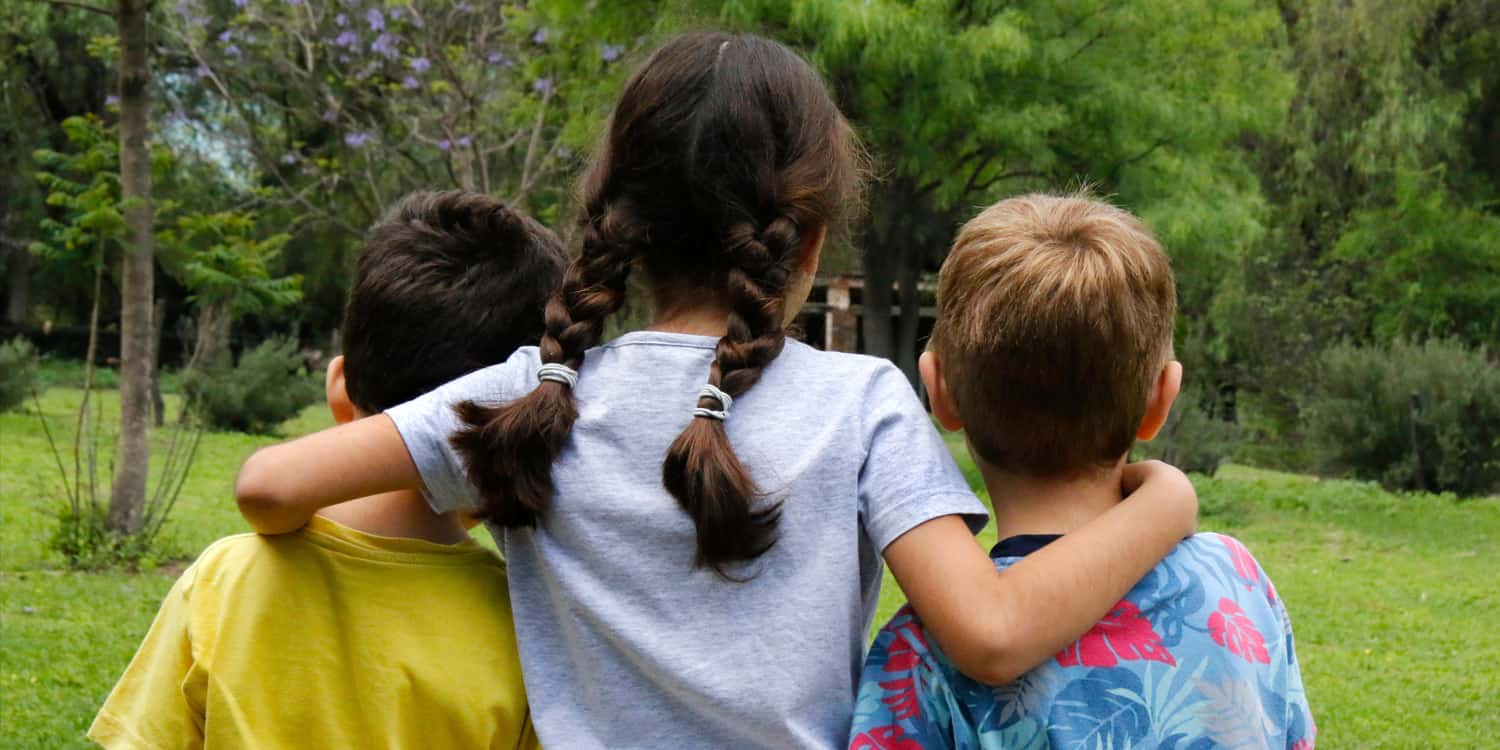
New research provides evidence that having more siblings can negatively affect a child’s cognitive development, while also shaping their social behavior in complex ways. Published in American Sociological Review, the study finds that each additional sibling can lead to lower cognitive skills, but the presence of older siblings might enhance a child’s social behavior.
Previous studies suggested that children from larger families might have lower educational achievements due to diluted parental resources – the idea that parents have limited time, attention, and money, which must be shared among more children. However, some researchers argued that these differences were not directly due to family size but rather other parental factors like values or parenting styles. This debate motivated the current study, aiming to provide a clearer understanding using a comprehensive and long-term data set.
“My research interests include family dynamics and social inequality. How sibship composition is linked to child development and later outcomes is central to our understanding of the role family plays in shaping social disparities,” said study author Wei-hsin Yu, sociology professor and director of graduate studies at UCLA.
“In this particular case, there was a major debate around 2000 on whether the sibship size has an effect or not. People arguing there is no effect claims it is all about selection (parents who prioritize children’s cognitive development choose to have fewer children, and children from such families do better. But the existence of siblings is not the reason behind better or worse developmental outcomes), and they used a fairly new method then to show it. The method was not a problem, but the data were, because at that time the families have not been observed for very long. I thought I could use extra 20+ years of observations (from the same data source) to better settle the debate.”
The new study leveraged data from the National Longitudinal Study of Youth 1979 Children and Young Adults, a survey tracking all biological children of women in a nationally representative sample of U.S. residents born between 1957 and 1964. The analysis focused on 9,479 children, providing a rich and diverse sample for examining family dynamics over time.
Two primary outcomes were measured: cognitive development, assessed using the Peabody Picture Vocabulary Test (PPVT) scores, and behavioral development, evaluated through the Behavior Problem Index (BPI). The PPVT measures vocabulary and is seen as a proxy for verbal intelligence, while the BPI gauges a range of social behaviors from antisocial to peer conflicts. Additionally, the Home Observation Measurement of the Environment index was used to understand changes in the home environment and parental support.
The study’s findings on cognitive development reaffirmed the resource-dilution model. It showed that children with more siblings generally scored lower on cognitive tests, indicating that the more siblings a child has, the less cognitive resources they might receive. This was a consistent pattern across different statistical models and highlighted the impact of family size on a child’s intellectual growth.
Interestingly, the study found that the negative impact of gaining a sibling on cognitive skills was most significant for first-born or second-born children. This suggests that the resources available for a child’s development become more restricted as the family grows, impacting those born earlier more profoundly.
“The extent to which having a sibling helps or hurts a child’s development depends on the child’s own ordinal position and whether the sibling in question is younger or older,” Yu told PsyPost. “When the family is small, with only one or two children, the existing children tend to exhibit worse cognitive development with a new child added to the family.”
“Adding a child does not affect the cognitive development of later-born children in larger families much, because such children already face restricted access to resources for cognitive development (i.e. their older siblings have used up the parental resources available). In this sense, family size actually matters more in societies where most families are small.”
In terms of behavioral development, the picture was more nuanced. Overall, the presence of siblings, particularly older ones, seemed to benefit a child’s social behavior. Older siblings might act as role models or companions, aiding in the development of social skills. However, the addition of younger siblings did not consistently provide these benefits and, in some cases, appeared to increase behavioral problems, especially for the first-born or second-born children.
“For sociobehavioral development, children from larger families generally fare better, but that is because children with older siblings behave considerably better,” Yu explained. “Having younger siblings does not help sociobehavioral development; in fact, firstborn children tend to exhibit worse behavior when a new child is added to the family. Thus, while parents with only one child often feel compelled to add another child to help develop their existing child’s social skills, the new sibling tends to be detrimental, not beneficial, to the existing child’s sociobehavioral development.”
In other words, “children from larger families behave better because most of them have older siblings, which serve as resources for sociobehavioral development. But parents cannot help their existing children’s sociobehavioral skills by adding a child to the family,” Yu told PsyPost.
While the study provides significant insights, it also has limitations. One key concern is that measures of behavioral problems were based on mothers’ reports, which might be subject to bias. Mothers could perceive younger children’s behavior more leniently, potentially skewing the results. Future studies could benefit from incorporating data from additional sources, such as teachers’ assessments, to validate these findings.
Another limitation is the study’s focus on U.S. data, which may not fully represent global family dynamics. Expanding research to different cultural contexts could provide a more comprehensive understanding of how family size and sibling relationships impact child development worldwide.
“We face the limitation that a key measure in our study, children’s problem behavior, is based on mothers’ reports,” Yu said. “Mothers may tend to rate their younger children as having fewer behavioral problems than their older children, because they are more willing to excuse the former’s behavior. Nevertheless, the measure we used (behavioral problem index) is widely adopted and validated by researchers. Moreover, our result that children in very small families exhibit more problematic behavior than those in larger families, on average, is consistent with other research using teacher-rated behavioral problem indicators, suggesting the bias of mothers is not the reason for our findings.”
The study opens doors for further exploration into the complex interplay between family environment, cognitive development, and social behavior. Researchers could delve deeper into how specific aspects of sibling interactions, such as the quality of sibling relationships or the influence of significant age gaps, contribute to these developmental outcomes.
“Doing research on how changes in sibling composition affect child development requires data collection for a very long period of time (30 years in this case), with longitudinal follow-up of each child’s developmental outcomes,” Yu explained. “I used test scores for cognitive development and the behavioral problem index because those two indicators have been measured since each child in the data was very young (all the way to their teenage years or early adulthood). It’s possible that siblings can be related to other aspects of development, but we don’t have a lot of indicators that have been repeatedly measured over a span of 30 years. It would be useful to collect more data and have a wider range of measures of human development for children from each family for a long period of time.”
The study, “Effects of Siblings on Cognitive and Sociobehavioral Development: Ongoing Debates and New Theoretical Insights“, was authored by Wei-hsin Yu and Hope Xu Yan.










Discussion about this post