


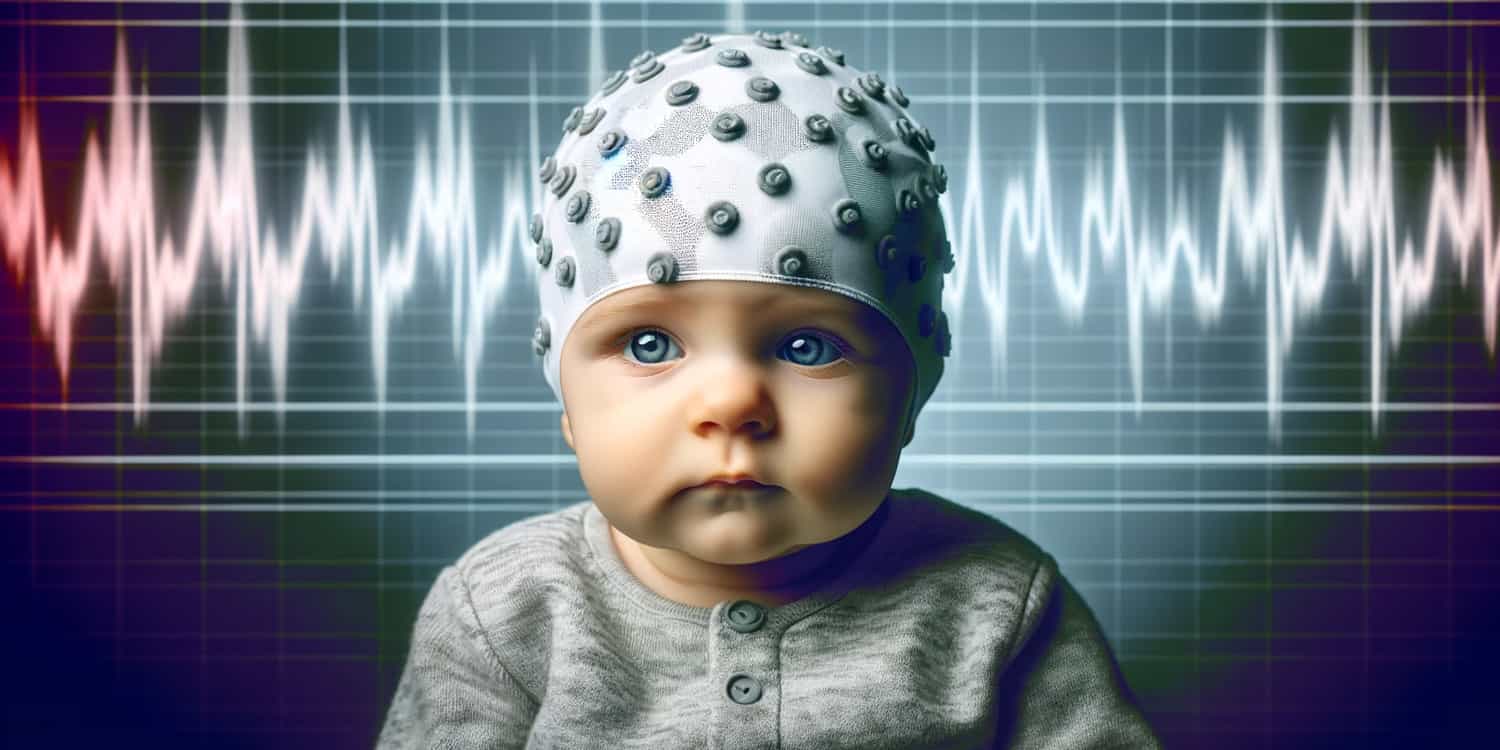
New research provides evidence that infants as young as five months old can differentiate between helpful and harmful behaviors. The study, published in Social Neuroscience, used brainwave monitoring to observe how babies’ brains react to prosocial (helpful) and antisocial (harmful) actions. This research provides new insights into the early development of social cognition and moral evaluation in infants.
The motivation for this study stems from a long-standing curiosity in the scientific community about the roots of moral behavior and cognition. Previous research has shown that from a very young age, infants pay more attention to certain social cues, such as attractive faces and emotional expressions. Additionally, studies have indicated that infants can distinguish between positive and negative behaviors toward others.
However, the neural basis of these early moral evaluations in infants has remained largely unexplored. The researchers aimed to fill this gap by investigating how the infant brain processes and responds to prosocial and antisocial actions.
“The understanding of the roots and early development of moral cognition has been a ‘hot’ and highly debated topic within the developmental cognitive neurosciences for the past 20 years,” said study author Elena Nava, an associate professor at the University of Milano-Bicocca and member of the Bicocca Child & Baby Lab.
“Indeed, understanding whether human beings are inclined to moral thinking opens a window into how we become moral animals, if we ever become such, and the experiences that promote prosocial vs antisocial behaviour.”
“In particular, in this study we were interested in the neural correlates of early moral cognition, as evidence of neurophysiological underpinnings are very much lacking in infants on this specific topic. There are a few reasons why studying the neural correlates of moral cognition (and in general of all cognition!) is important: first, it can add substance to the notion that babies are equipped with a primitive sense of morality. Second, it suggests that babies already possess brain circuits to encode complex cognitive information.”
To conduct this study, the researchers recruited 24 healthy, full-term infants aged five to six months. These infants were selected from a larger group, with others excluded due to factors like fussiness or issues with brainwave data. The study consisted of two phases: a familiarization phase and a test phase.
In the familiarization phase, infants watched short videos featuring puppets engaging in either helpful (prosocial) or hindering (antisocial) actions. The test phase involved showing the infants still frames from these videos, simulating the unfolding of the actions. During both phases, the infants’ brainwaves were monitored using an electroencephalography (EEG) cap, providing data on their neural responses to the stimuli.
During the familiarization phase, there was no significant difference in how long the infants watched prosocial versus antisocial videos, indicating equal initial interest in both types of actions. However, the brain activity data painted a more complex picture. The researchers focused on specific patterns of brain activity known as event-related potentials (ERPs), which are brain responses to specific sensory, cognitive, or motor events. They found that the infants’ brains responded differently to prosocial and antisocial scenes in several ways.
One significant finding was related to a brain response called the N290, which showed greater amplitude, or stronger brain response, to prosocial scenes, such as a puppet helping another puppet. This suggests that infants may inherently find helpful actions more engaging or meaningful. Another brain response, called the Nc, was greater in amplitude for antisocial actions, like a puppet hindering another. This could mean that negative actions attract more attention in infants, possibly due to their more arousing or discomforting nature. Additionally, a late brain response called the LPP was greater in response to prosocial scenes, indicating deeper processing of these positive social interactions.
“Babies start very early in life to develop a sense of morality, that helps them discriminate between those who behave ‘nicely’ vs others who behave ‘badly.’ While it is difficult to determine whether this discrimination also corresponds to a moral judgment, our data reveal that by age 5 months, the baby’s brain is able to detect and discriminate actions that qualify individuals as acting morally or immorally,” Nava told PsyPost.
The study also explored the relationship between infants’ temperament and their brain responses. Intriguingly, higher scores in ‘effortful control’ – a temperamental trait related to self-regulation – were associated with an increased neural bias towards antisocial interactions. This finding suggests that temperament may play a role in how infants process social interactions.
However, when it came to the manual choice task, where infants were given a choice between a prosocial and an antisocial puppet, no significant preference was found. This lack of preference contrasts with some previous studies and raises questions about the consistency of infants’ behavioral responses to moral scenarios.
“We were disappointed by the mismatch between behavior and neural data,” Nava said. “We were expecting babies to also prefer the prosocial over the antisocial individual, as assessed using a manual choice, and to correlate with the neural finding. However, that was not the case, as we did not find any difference between prosocial and antisocial individual (on a behavioral level).”
While the study sheds light on the early development of moral cognition in infants, it is not without limitations. One major challenge in studies involving infants is the high rate of data exclusion due to factors like movement or fussiness. This was also the case in this study, where a significant number of the initially tested infants had to be excluded. Additionally, the limited number of trials each infant could participate in before losing attention might have affected the depth of the findings. Future research might benefit from shorter, more engaging stimuli that could hold infants’ attention for longer, allowing for more comprehensive data collection.
“There are so many questions that still need conclusive answers,” Nava said. “For me, two questions/interests would be worth investigating: first, the role of individual differences in promoting moral cognition; second, more longitudinal studies to establish whether early sensitivity to moral cognition predicts higher moral behavior later in childhood.”
The study, “Neural signatures to prosocial and antisocial interactions in young infants“, was authored by Victoria Licht, Margaret Addabbo, Elena Nava, and Chiara Turati.










Discussion about this post