


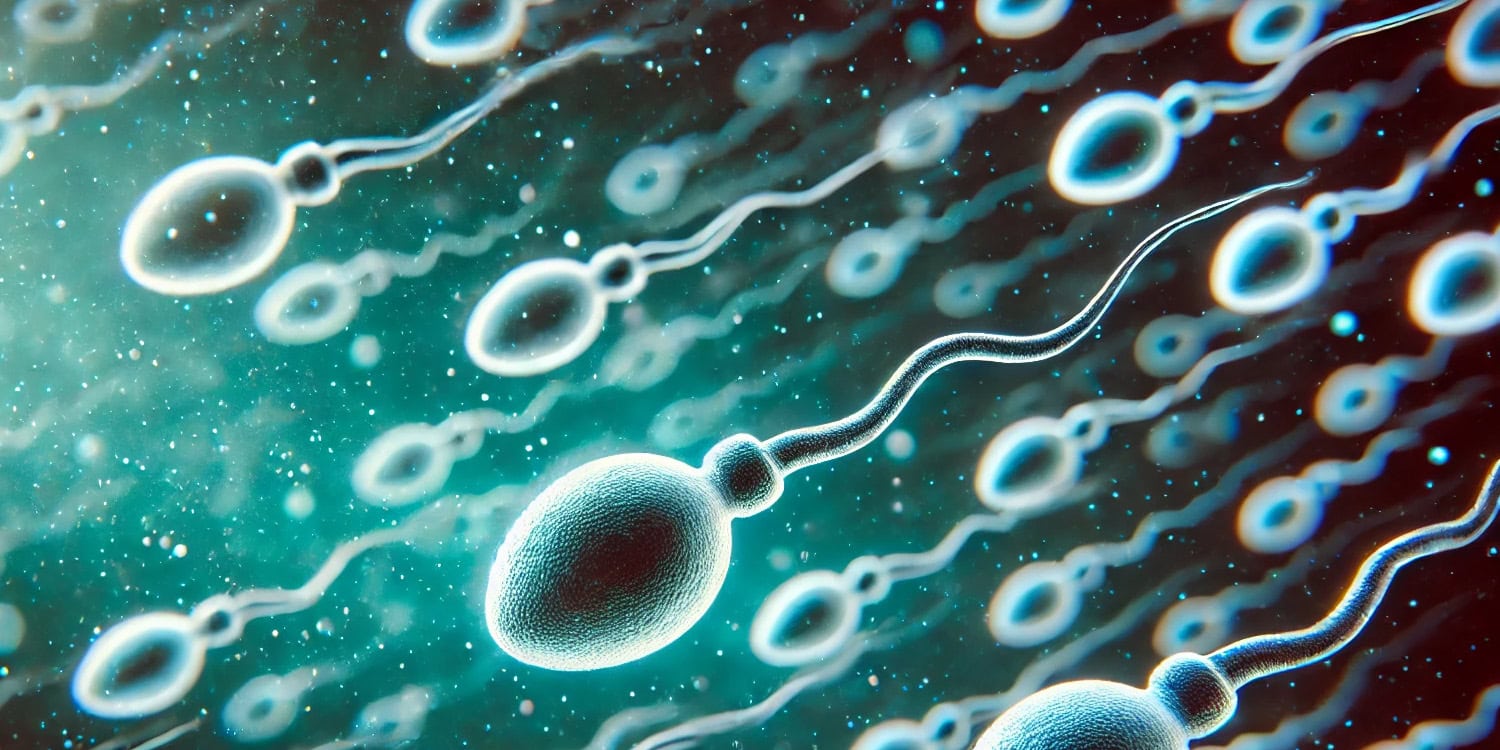
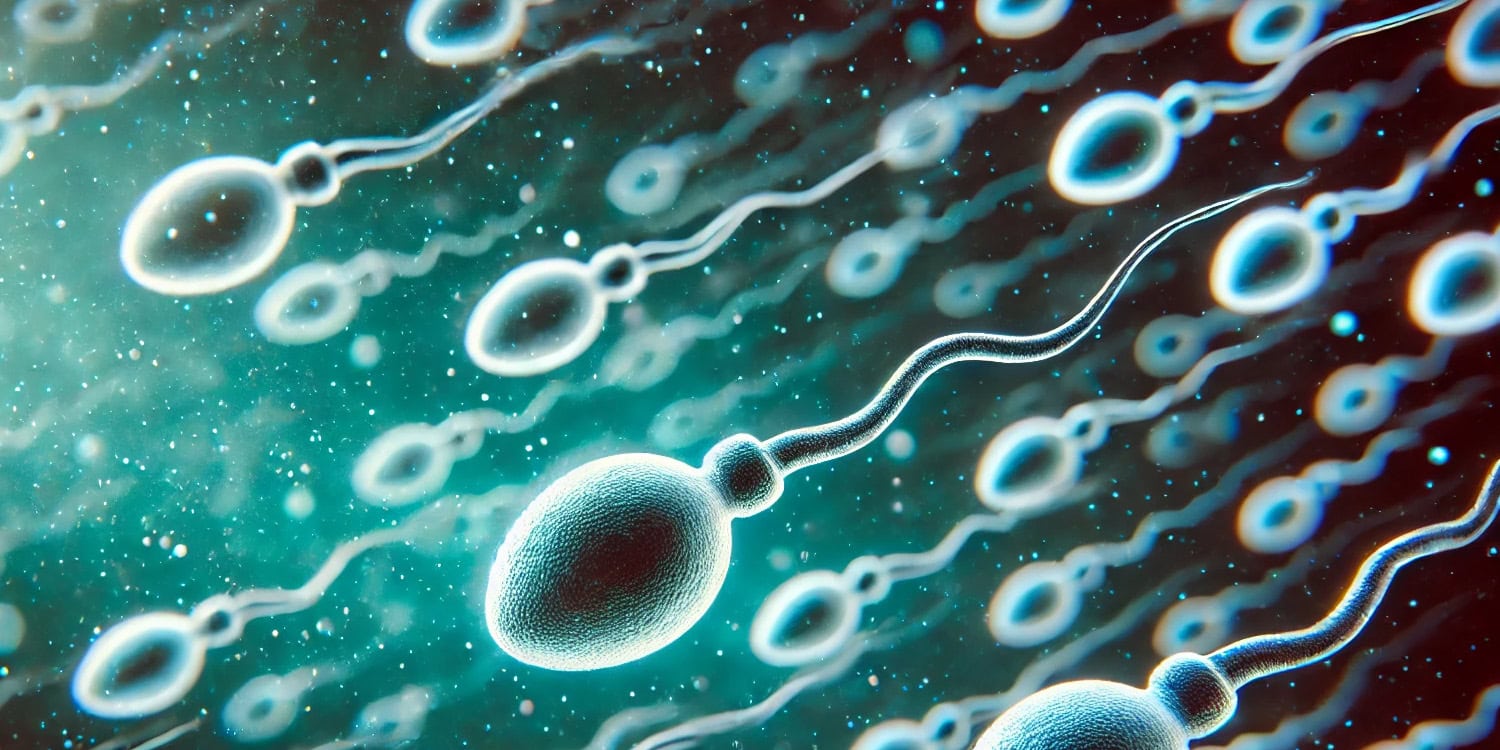
A recent study published in Nature Communications suggests that stress may boost sperm respiration (energy production) and motility (movement) in both mice and men, with effects emerging several months after a stressful event. This finding points to a possible link between environmental stress and male reproductive health.
The study was driven by concerns over global declines in fertility and semen quality seen in recent decades. Researchers at the University of Colorado Anschutz Medical Campus aimed to explore how stress impacts sperm function at a cellular level, focusing on processes related to energy production and motility that are critical to sperm performance.
In particular, the team wanted to see if stress could cause long-term changes in sperm that persist well after the stressful period has ended. By uncovering these mechanisms, they hope to gain new insights into how male reproductive cells adapt to environmental challenges, potentially shedding light on stress’s broader implications for fertility and reproductive success.
“As a neuroscientist, understanding the impact that the preconception environment has on post-conception embryo and brain development is critical to identifying points of intervention, prevention, and causal mechanisms important for neurodevelopmental disorders,” said Tracy Bale, the lead author and the Anschutz Foundation Endowed Chair in Women’s Integrated Mental and Physical Health Research at the Ludeman Center at CU Anschutz.
The study consisted of two primary sections: testing the impact of stress on human sperm and investigating stress effects in mice to examine biological mechanisms more closely.
In the human section, 34 healthy men from the Denver area participated in a study with multiple visits over several months, providing semen samples and reporting their perceived stress levels. Using advanced sperm analysis software, the researchers measured sperm motility at each visit, analyzing how factors such as average velocity, linear velocity, and progressive motility varied in relation to stress reported three months prior.
The researchers observed that stress experienced two to three months before sperm collection was associated with higher sperm motility in healthy male participants. The improvements in motility included increased curvilinear (circular) and straight-line velocities, as well as overall progressive motility, which is known to play a key role in successful fertilization.
To understand the mechanisms behind this unexpected boost in sperm function, the researchers turned to a controlled laboratory setting with mice. By simulating stress conditions, they observed how stress hormones affected epididymal epithelial cells, which are essential for sperm maturation and motility.
When exposed to stress hormones, these cells exhibited significant shifts in mitochondrial energy dynamics, an essential part of cellular respiration. In response to stress, the cells released extracellular vesicles carrying stress-related molecules that influenced nearby sperm cells. When these vesicles interacted with sperm, they increased sperm respiration and energy output, ultimately improving motility. This insight provided a possible biological explanation for the increased motility observed in human sperm following stress.
Further analysis of the stressed cells revealed that stress led to molecular changes in the cell’s chromatin—the structure housing genetic material—specifically affecting a modification associated with gene repression. These changes in gene expression influenced pathways responsible for energy metabolism and mitochondrial organization, altering the cells’ baseline energy requirements even after the stress ended.
The researchers found that these stress-induced changes in energy and mitochondrial processes were long-lasting, suggesting that cells might recalibrate their basic energy settings to adapt to new conditions. The extracellular vesicles released by these reprogrammed cells serve as a form of cellular communication, transferring stress-related energy adjustments to the sperm. This pathway, where stress experience in one cell type leads to altered function in another cell, points to a sophisticated signaling system that can have ripple effects on reproductive functions.
“Imagine you have a car that’s struggling to get up a steep hill. When the engine is stressed, the car becomes less efficient. However, with a little more gas, you can boost the overall performance for a smoother drive. Just as your car becomes more efficient under stress, with the right adjustments, cells improve their energy production and movement when stress-induced factors are present,” said Nickole Moon, the paper’s first author and student at CU Anschutz who is on the research team.
These findings illustrate how stress can influence male reproductive health through complex molecular and cellular pathways, improving specific sperm traits and suggesting a previously unknown adaptive mechanism. By mapping this connection, the study offers insights that could eventually be applied to fertility treatments or improve understanding of environmental factors impacting reproductive health.
“Chronic stress experience can have a significant impact on reproduction and offspring development,” Bale told PsyPost. “Being aware of ways to mitigate stress and the timing of its effects are important if considering pregnancy.”
But as with all research, there are some limitations. For example, they could not evaluate whether improved motility translates directly into increased fertility in humans, nor could they confirm if these changes affect long-term reproductive outcomes. Additionally, the study focused on sperm motility and mitochondrial function but did not assess if these changes impact embryo or fetal development. Future studies will likely explore how these effects might vary among individuals and determine whether similar outcomes apply to different types of stress or other mammalian models.
“We have not examined the changes in human sperm fertility outcomes, or offspring development (only in mice),” Bale said.
The researchers plan to examine the roles of various signaling molecules and proteins within the extracellular vesicles, which carry important information between cells and might hold the key to unlocking more details about stress’s effects on reproductive health.
“We have hypothesized that the stress effect on sperm results in a change in the rate of embryo development, resulting in consequences to the brain and increasing risk for neurodevelopmental disorders,” Bale explained. “Our long-term goals are to conduct embryo studies in mice to confirm the specific molecules involved and the timing. We need to understand how the rate of brain development matters for how the brain functions after birth, and where we can improve outcomes for improving risk.”
“The impact of stress on germ cells, fertility, and the mechanisms underlying the transmission of parental stress experiences across generations are not well understood,” added Neill Epperson, a professor and chair of the CU Department of Psychiatry and Bale’s partner on the studies. “By continuing to recruit participants for these trials and conducting thorough stress evaluations along with the work taking place in the lab, we aim to gain a deeper understanding of how past stressors may affect future offspring.”
The study, “Stress increases sperm respiration and motility in mice and men,” was authored by Nickole Moon, Christopher P. Morgan, Ruth Marx-Rattner, Alyssa Jeng, Rachel L. Johnson, Ijeoma Chikezie, Carmen Mannella, Mary D. Sammel, C. Neill Epperson, and Tracy L. Bale.










Discussion about this post