


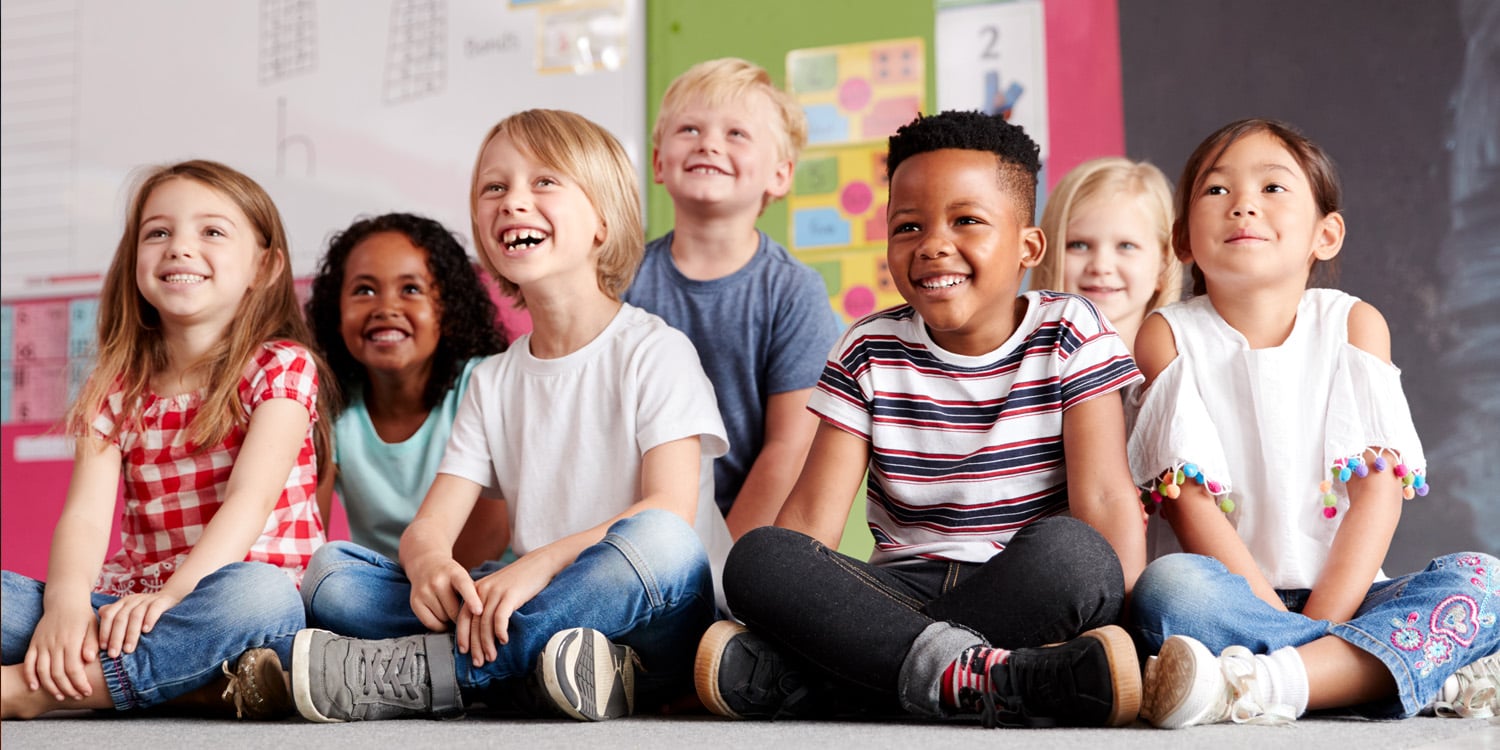
In an increasingly globalized world, the demographic landscape of classrooms across Western Europe and North America has undergone significant changes, with children now more likely than ever to find themselves in ethnically diverse educational environments. A groundbreaking study published in Child Development sheds light on the impact of this diversity, revealing that children in ethnically diverse classrooms excel in understanding and recognizing other people’s thoughts and feelings compared to their peers in less diverse settings.
This ability, referred to as “theory of mind,” is crucial for navigating social interactions and developing empathy. The study suggests that the variety of perspectives offered by a diverse classroom setting may serve as a potent resource for enhancing children’s social and cognitive development.
“Children differ from each other in their ability to reason about other people’s thoughts, feelings and perspectives, what psychologists call ‘theory of mind.’ I’ve long been interested in how social experiences give rise to these differences,” explained study author Rory T. Devine, an associate professor in developmental psychology at the University of Birmingham and author of Theory of Mind in Middle Childhood and Adolescence.
“While there has been considerable research on how early social experiences in the family shape children’s theory of mind, remarkably little work has examined how social experiences at school shape this skill. Given that children increasingly participate in ethnically diverse classrooms, we wanted to investigate whether social interactions with other children with diverse cultural backgrounds and perspectives might benefit children’s ability to reason about other people’s minds.”
A total of 1,100 English-speaking children, aged between 8 and 13 years, were initially recruited from 37 state-funded primary and secondary schools. Participation required both caregiver consent and the children’s ability to participate without aid, leading to the exclusion of 80 children due to lack of consent or need for assistance. The COVID-19 pandemic further impacted the study by interrupting data collection, particularly the return of teacher questionnaires, which resulted in data from only 730 children being available for analysis.
The research was conducted in two whole-class sessions about a week apart, each lasting between 60 to 90 minutes. Led by two research assistants, these sessions included a series of tasks performed individually by the children on computers, utilizing the online platform PsyToolkit. In addition to the child-focused tasks, teachers completed a questionnaire for each child, contributing crucial data on classroom dynamics.
To assess theory of mind, children participated in a trio of tasks: the Silent Film Task, the Strange Stories Task, and the Triangles Task. These tasks are designed to measure the child’s ability to interpret and explain behaviors and interactions in various scenarios, requiring an understanding of false beliefs, deception, and social cues.
The researchers found that children in more ethnically diverse classrooms demonstrated superior theory of mind abilities compared to their peers in less diverse settings. Children who had at least one friend from a different ethnic background outperformed their peers who did not have cross-ethnic friendships in theory of mind tasks. This effect was observed across various age groups, ethnicities, and genders.
The analysis also explored the interplay between classroom ethnic diversity and cross-ethnic friendships factors. While classroom diversity was associated with an increased likelihood of forming cross-ethnic friendships, it was these friendships themselves that were directly linked to better theory of mind abilities.
“Together, these results suggest that diverse educational environments have the potential to enhance children’s social skills,” Devine told PsyPost. “In other words, diversity in the classroom is an important asset for supporting children’s social development.”
Importantly, these relationships held true even after accounting for various potential confounding factors, such as verbal ability and executive function, indicating a unique contribution of ethnic diversity to the development of social cognition.
“As scientists, we always seek to challenge our findings,” Devine explained. “One alternative explanation for our results is that classroom ethnic diversity and cross-ethnic friendships may simply benefit more general intellectual abilities such as cognitive flexibility or language ability.”
“We therefore were surprised that the results in our study persisted even when we controlled for differences between children in these factors. This suggests that experiences of social interaction with diverse peers specifically benefit social-cognitive skills like theory of mind, rather than conferring general cognitive benefits.”
However, the study is not without its limitations. The cross-sectional design limits causal inferences, leaving open questions about the directionality of the observed relationships. Moreover, the reliance on broad ethnic categories may mask the intricate ways in which specific cultural, linguistic, or religious differences impact children’s social cognition.
“While our study was the first to look at the links between children’s theory of mind, classroom ethnic diversity, and cross-ethnic friendships, one key caveat is that we adopted ethnic categories/labels typically used in census research,” Devine noted. “These categories are quite broad and so it is not clear whether they reflect differences between children in their culture, language, religious experiences for example.”
“We would like to understand the nature of the associations we’ve identified,” the researcher said. “While we might assume that cross-ethnic friendships provide a training ground for children to hone their abilities to reason about other people’s thoughts and feelings, it is also possible that those who are skilled at reasoning about other people’s minds in the first place are better equipped to forge cross-ethnic friendships. Longitudinal work is needed to unpack these findings further.”
The study, “Children in ethnically diverse classrooms and those with cross-ethnic friendships excel at understanding others’ minds,” was authored by Rory T. Devine, Imogen Grumley Traynor, Luca Ronchi, and Serena Lecce.










Discussion about this post